I found a few pieces of honey mushroom in the yard and some young golden oysters growing on one of my logs. I’ve been wanting to pickle something lately, so I figured I’d give the young golden oysters a shot.
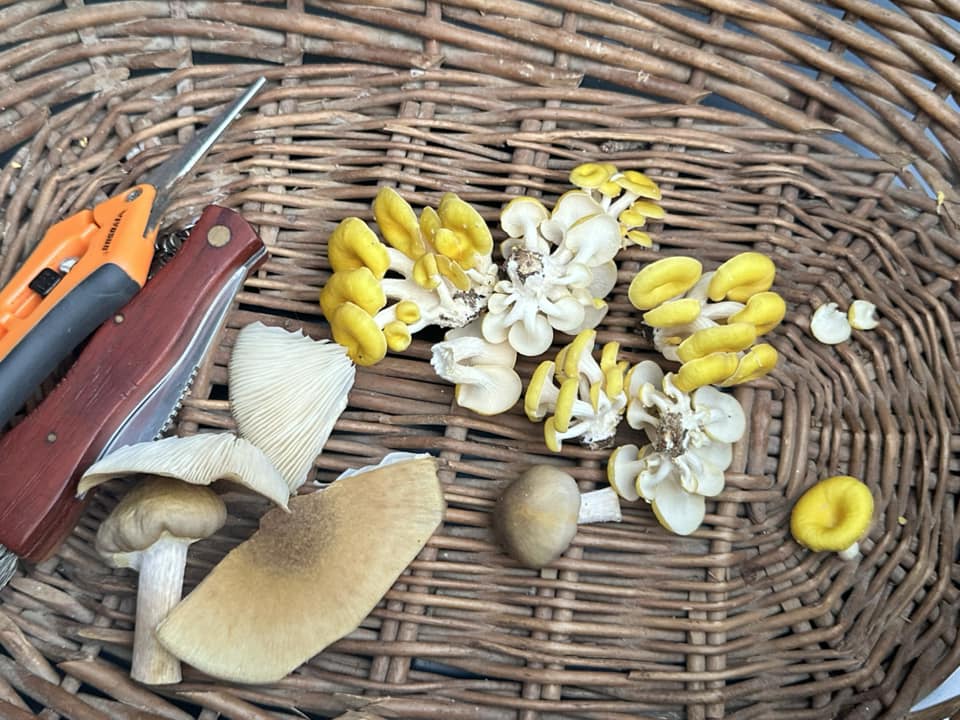
I hadn’t eaten honey mushrooms before this. They’re often parboiled first, but I was curious whether the pickling process would accomplish the same thing. I’ve since tried them, and this method worked fine for me. That said — everyone’s body is different. Always start small, pay attention to how you feel, and go slow when trying new foods, especially wild ones. The mushrooms should be cooked in a skillet dry until most of the water cooks out. Here I knew Oyster mushrooms can be eaten raw or cooked, so I went with the flow.
What I used
- Golden oyster mushrooms
- Honey mushrooms
- 1 jalapeño
- 1 carrot
- 1 turnip (because I wanted to try pickled turnips)
- 2 tablespoons honey onion garlic
- Peppercorns
- Rosemary
- Thyme
- Nutmeg
I measured all of this with my soul.
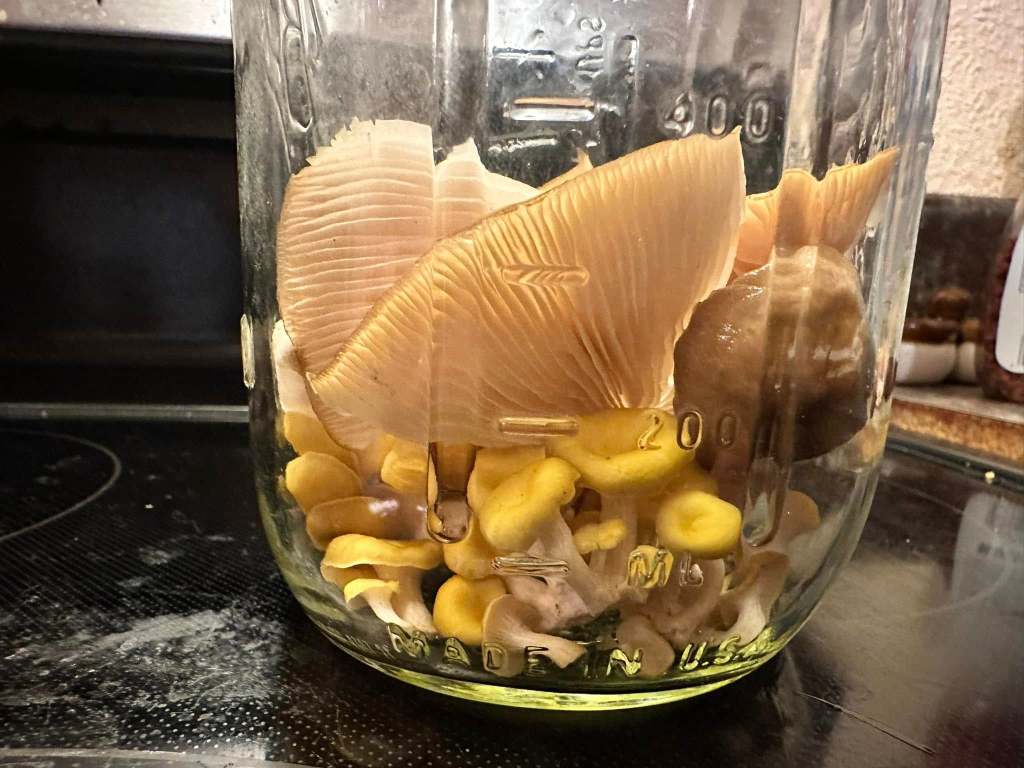
Jam everything into a quart jar. Next time, I’ll probably put the chunkier vegetables on the bottom and the mushrooms more toward the middle. I added my seasonings directly to the jar, but you can absolutely add them to the liquid and boil everything together instead.
The pickling liquid
The standard ratio is 50% water / 50% vinegar, but you can adjust this to taste. I like a stronger vinegar bite, so I went with 80% vinegar / 20% water.
A quart jar holds 32 ounces, and since you’ve already got solids in there, you know that’ll be plenty.
For my mix:
- 32 oz × 0.80 = 26 oz vinegar
- 32 − 26 = 6 oz water
I combined the liquid and weighed it in grams, ending up with 988.5 grams total.
Salt percentage is 2%:
- 988.5 × 0.02 = 19.77 grams, so I used 20 grams of salt
It’s not recommended to use table salt. I used Himalayan sea salt because that’s what I had on hand.
I added the salt and a little sugar to the mix. I didn’t measure the sugar — I don’t care for overly sweet pickles, so I added maybe a teaspoon or two. Again… measured with the soul. Use however much sugar you want. If you’re adding spices to the liquid instead of the jar, this is when you’d add them.
Bring the mixture to a rolling boil, then carefully pour it into the jar. Be careful — hot = bad. I had extra liquid, so I poured it out, but you could easily do additional jars if you wanted.
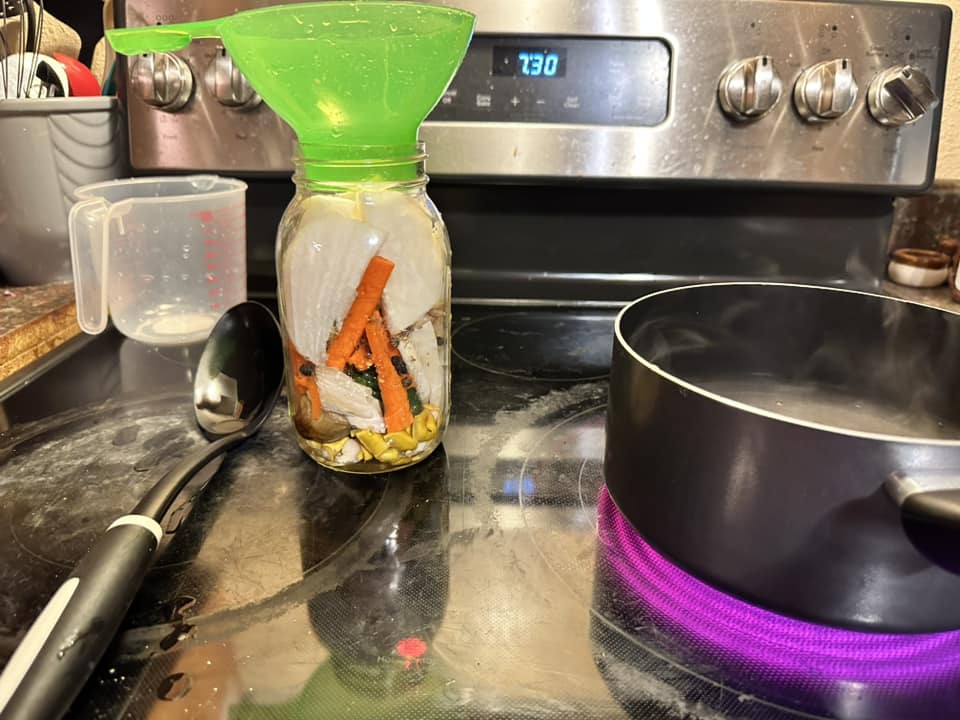
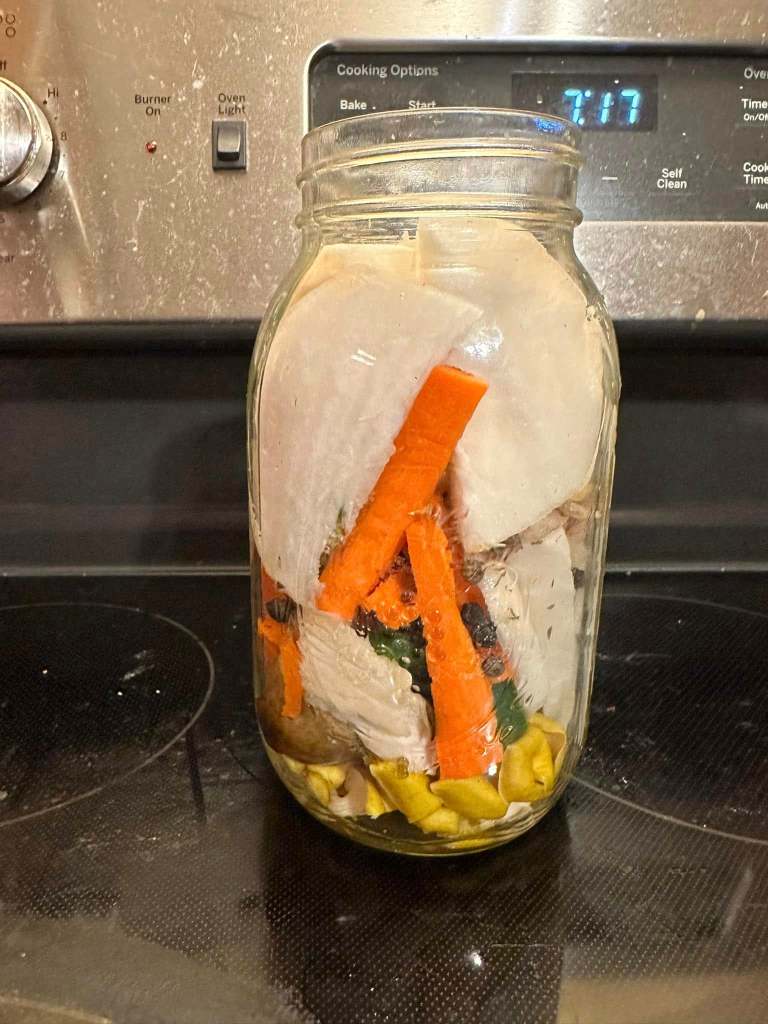
Sushi sticks are very handy here. I used one to push out air bubbles. Let everything cool to room temperature first, then put a lid on it and move it to the fridge.
Some people say pickled mushrooms are ready the next day. I let mine sit for about a week before digging in.
A quick note on wild mushrooms & fermentation
Always be 100% confident in your mushroom identification before consuming anything wild. When in doubt, don’t eat it. If you’re new to wild mushrooms, consult experienced foragers or local experts. Always cook your mushrooms thoroughly.
And to my fermentation friends — I see you. This is a quick pickle, not a long, wild fermentation. No offense intended. There’s room for all methods here.
Let me know what recipes you’ve tried — or want to try.
Do you pickle mushrooms?


 Where mushrooms, plants, and ideas grow...
Leave a comment